
Home › Blog › Signs of Crawl Space Moisture
Homeowner Guide
7 Signs Your Crawl Space Has a Moisture Problem
Most people never look under their house. Here's what to watch for from inside, and what you'll see if you open the crawl space door.
Request a Free QuoteTakes about a minute · Free inspections · No obligation
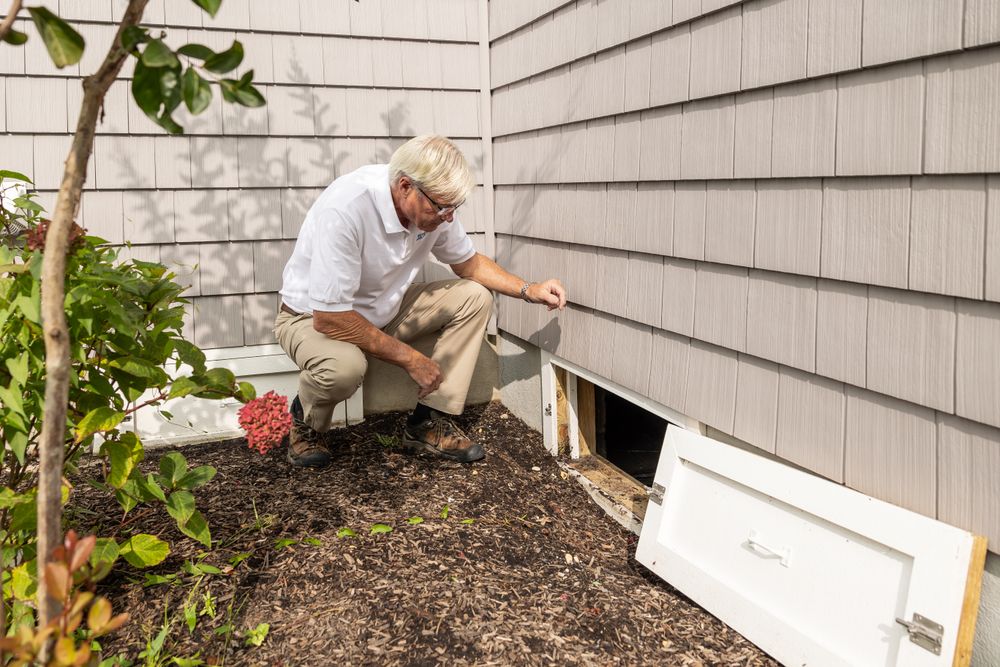
In the humid Carolina climate, crawl spaces get wet quietly. By the time most homeowners notice, the insulation has fallen and the wood has been damp for years. These are the signs to watch for.
1. A musty smell inside
Air moves up from the crawl space into your home through gaps in the floor, plumbing holes and ductwork. If the house smells musty, especially on humid days or when the HVAC kicks on, the crawl space is a likely source.
2. Floors that feel soft or bouncy
Floors that sag, bounce or feel spongy can mean the joists or subfloor are weakened by moisture, or that supports underneath have settled. See crawl space repair.
3. Cupped or buckling hardwood
Wood floors that cup up at the edges are often absorbing moisture from below.
4. High humidity and more bugs
If the house feels clammy, the AC runs constantly, or you're seeing more crickets, spiders or silverfish, damp conditions under the house may be the reason.
5. Insulation hanging down
Fiberglass batts between floor joists soak up moisture, get heavy and fall. If you open the crawl space door and see insulation on the ground, moisture is almost always involved.
6. Sweating ducts and pipes
In summer, humid air hitting cold AC ducts and water pipes condenses and drips onto the ground, adding even more moisture.
7. Mold, standing water or bare dirt
White or dark growth on joists, puddles after rain, or a torn plastic sheet with red clay showing are clear signs the crawl space isn't being kept dry.
What to do next
- Check the outside. Clean the gutters, extend downspouts at least several feet and make sure soil slopes away from the foundation.
- Take a look. With a flashlight from the access door, look for the signs above. Don't crawl in if there's standing water, wiring problems or signs of animals.
- Get an inspection. A crawl space pro can measure moisture in the wood, check the framing and show you photos. Depending on what they find, the fix might be a new vapor barrier, full encapsulation or repairs.
Request Your Free Quote
Answer a few quick questions and a local crawl space pro will reach out to set up your free inspection and estimate.
- 100% free
- No obligation
- Takes about a minute
Your info is only used to contact you about your project. No spam, ever.
Common Questions
Is some moisture in a crawl space normal?
Some is, but wood should stay dry enough that mold and rot can't grow. Damp insulation, mold, sweating ducts or standing water mean it's too wet.
Can a wet crawl space affect my health?
Mold and musty air from the crawl space can make their way into the house. If anyone in the home has allergies or asthma, it's worth getting checked.
Should I close my crawl space vents in summer?
Closing vents without sealing and dehumidifying the space usually doesn't solve the problem. A properly designed encapsulation is the better fix.
How often should I check my crawl space?
A quick look once or twice a year, and after major storms, will catch most problems early.
Get a Free Estimate
A free inspection and a written estimate, with no pressure to sign.
Request a Free Quote